Ecommerce AI in 2026: Personalizing PDPs vs Automating Checkout
Introduction
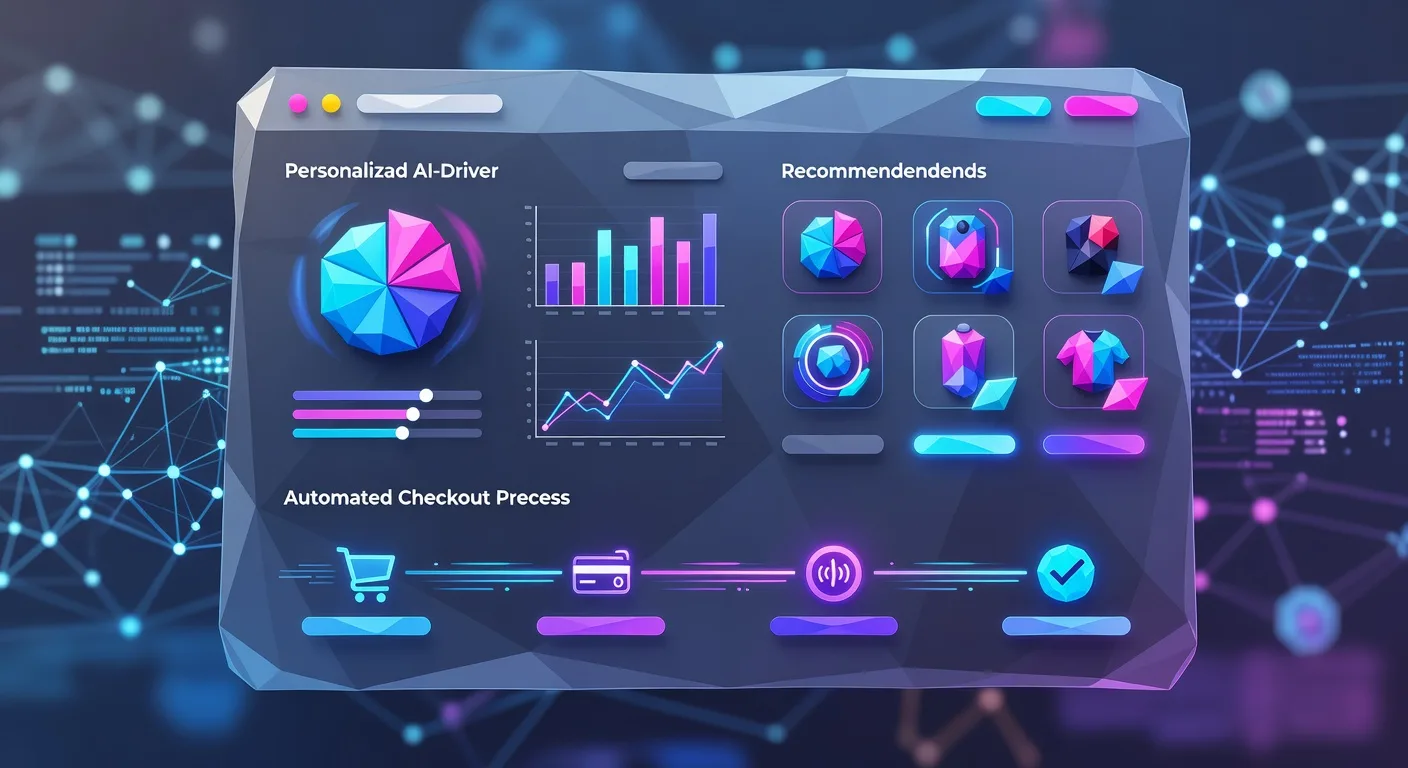
In the rapidly evolving landscape of ecommerce, 2026 marks a pivotal year where artificial intelligence (AI) technologies have matured to redefine how consumers interact with online stores. For marketers and brand managers, understanding the impact of AI tools on two critical phases of the shopping journey—the Product Detail Page (PDP) and the checkout process—is essential. This article explores the dynamic tension and synergy between AI-powered PDP personalization and checkout automation, revealing which strategies offer the most meaningful returns and how they complement each other to boost conversions and revenue.
AI-Powered Personalization on Product Detail Pages
The Shift to Real-Time, Behavior-Driven Experiences
Gone are the days when ecommerce personalization relied on static customer segments or simple rule-based recommendations. In 2026, AI systems analyze real-time browsing behavior, purchase history, and inventory data to tailor PDP content dynamically. This includes customized product recommendations, personalized offers, and even delivery options aligned with individual shopper preferences.
Driving Revenue Through Intelligent Recommendations
Product recommendations on PDPs have become a cornerstone of ecommerce revenue. Leading retailers report that AI-driven recommendations contribute between 31% and 35% of total online sales, with top performers seeing revenue uplifts around 40% compared to non-personalized competitors. For example, ASOS achieved a 9% increase in average order value (AOV) by integrating dynamic upselling and complementary add-ons directly on product pages.
Enhancing Engagement and Conversion Metrics
Beyond revenue, AI personalization impacts shopper engagement metrics such as click-through rates, scroll depth, and dwell time. By presenting relevant bundles, similar items, or “buy it again” options, AI not only encourages larger baskets but also makes the shopping experience more intuitive and satisfying. Brands that unify browsing, purchase, and inventory data into a single system see sharper recommendation accuracy and stronger cross-selling performance.
Checkout Automation: Streamlining the Final Steps
Real-Time Flow Optimization and Fraud Prevention
While PDP personalization attracts and persuades shoppers, the checkout process remains a critical bottleneck. AI-powered checkout automation in 2026 focuses on reducing friction through real-time optimization of the payment flow. This includes biometric authentication, predictive analytics to pre-fill forms, and dynamic payment routing that selects the best payment method based on device signals and issuer responses.
Combating Fraud with Intelligent Risk Controls
Security is paramount at checkout. Modern AI systems incorporate tokenized card data, behavioral biometrics, and fraud risk scoring to detect and prevent fraudulent transactions without disrupting legitimate customers. Initiatives like India’s RBI AI platform exemplify how agentic AI can autonomously execute payment steps while managing risk.
Bridging the Mobile-Desktop Conversion Gap
Mobile ecommerce has historically lagged behind desktop in conversion rates, often due to cumbersome checkout flows. AI-enabled single-page checkouts, progressive form disclosure, and biometric payments have narrowed this gap to under 15%, correlating with a 23% overall lift in conversion rates. Retailers employing AI experimentation platforms can run 2.7 times more tests quarterly, accelerating continuous checkout improvements.
Comparing ROI: PDP Personalization vs Checkout Automation
Acquisition Costs and Efficiency Imperatives
With customer acquisition costs rising about 40% over two years, ecommerce growth strategies in 2026 increasingly prioritize efficiency. Both PDP personalization and checkout automation offer compelling ROI but address different parts of the funnel. Personalization excels at increasing basket size and engagement, while checkout automation reduces abandonment and secures payment completion.
Synergies and Tradeoffs
While PDP personalization can drive up average order values by encouraging add-ons and upsells, its effectiveness depends on a seamless checkout experience. Conversely, checkout automation’s impact on conversion rates can be limited if shoppers are not sufficiently engaged or motivated to proceed. Successful brands integrate both, using AI to personalize product discovery and simultaneously streamline payment flows.
Measuring Impact and Business Value
Leading consultancies emphasize anchoring AI initiatives to measurable outcomes. For example, McKinsey highlights that hyperpersonalization across the customer journey widens the gap between leaders and laggards. Thus, investments in AI tools should be evaluated not only by immediate conversion lifts but also by their contribution to long-term customer loyalty and operational efficiency.
Practical Applications and Examples
- Dynamic Upselling on PDPs: Retailers use AI to suggest premium alternatives or complementary products based on real-time shopper signals, boosting AOV.
- Timed Promotions and Urgency Nudges: Countdown timers and slide-to-add-to-cart features accelerate purchase decisions.
- Biometric Authentication at Checkout: Facial recognition or fingerprint scanning reduces form errors and speeds transaction completion.
- Smart Payment Orchestration: AI selects the optimal payment gateway and method, improving approval rates and reducing declines.
- Fraud Risk Scoring: Continuous monitoring of behavioral patterns flags suspicious activity without adding friction.
Quick Checklist
- Implement AI-driven product recommendations on PDPs to increase engagement and AOV.
- Integrate real-time checkout optimization tools to reduce cart abandonment.
- Employ biometric authentication and progressive form filling to streamline mobile checkout.
- Utilize AI-powered fraud detection systems to balance security and user experience.
- Combine browsing, purchase, and inventory data for more accurate personalization.
- Run frequent AI-driven experiments to continuously refine PDP and checkout flows.
- Monitor conversion rate benchmarks separately for mobile and desktop platforms.
- Align AI initiatives with clear business metrics to justify investment.
FAQ
Q1: How much revenue uplift can AI personalization on PDPs realistically deliver?
A1: Leading ecommerce brands report revenue uplifts around 40% compared to non-personalized competitors, with product recommendations accounting for roughly one-third of total ecommerce revenue.
Q2: What are the main benefits of AI-driven checkout automation?
A2: Checkout automation reduces friction and abandonment by optimizing payment flows in real time, enhancing fraud prevention, and enabling dynamic payment options tailored to the shopper’s context.
Q3: Can AI personalization and checkout automation be implemented independently?
A3: Yes, but their combined effect is greater. Personalization drives engagement and basket size, while checkout automation ensures that more of those engaged shoppers complete their purchases.
Q4: How does AI help close the mobile versus desktop conversion gap?
A4: By simplifying checkout with single-page flows, biometric payments, and progressive disclosures, AI reduces mobile friction, narrowing the conversion gap to under 15%.
Q5: What should marketers prioritize when choosing AI tools for ecommerce?
A5: Prioritize solutions that integrate well with existing data systems, offer measurable business impact, and support continuous experimentation to adapt to evolving shopper behavior.
Final Thoughts
In practice, the choice between investing in AI for PDP personalization or checkout automation is not a zero-sum game. Each addresses distinct but complementary challenges in the ecommerce journey. Personalization excels at capturing attention and increasing order value by making product discovery more relevant and engaging. Checkout automation, on the other hand, tackles the critical final hurdle—turning interest into completed sales by minimizing friction, reducing errors, and safeguarding transactions.
The bigger picture reveals that ecommerce success in 2026 hinges on a holistic approach where AI tools work in concert. Brands that silo their AI investments risk suboptimal returns; those that integrate personalization with seamless checkout experiences create a virtuous cycle of higher engagement, larger baskets, and improved conversion rates.
What this suggests for marketing professionals and brand managers is a strategic imperative to evaluate AI investments not just on isolated metrics but on their combined ability to enhance the entire customer journey. Continuous experimentation and data-driven decision-making are vital, as shopper expectations and technologies evolve rapidly.
Ultimately, the most effective ecommerce AI strategies in 2026 are those that balance the art of personalized discovery with the science of frictionless transactions—delivering both delight and efficiency to the modern online shopper.
Sources
- How AI Personalization Is Transforming eCommerce in 2026 – EComposer
- AI eCommerce Personalization: Product Recommendations Guide
- AI Personalisation for Ecommerce 2026 | Involve Digital
- AI Fixing Broken Checkout Flows for 2026
- Conversion Rate Benchmarks 2026: Industry and Channel Data
- 2026 Ecommerce Benchmarks: The Efficiency Imperative
- The State of Grocery Retail Europe 2026 - McKinsey
- Growth, Marketing & Sales Insights | McKinsey & Company
- The value of getting personalization right—or wrong—is multiplying
- The 2026 Ecommerce Customization and Personalization Guide | Kickflip
- Ecommerce Personalization: 12 Scalable Tactics and Examples (2026) - Shopify
- Ecommerce Personalization Strategy: 2026 Guide | Insider One
Ready to Get Started?
Explore production-ready 3D models for your next project. Browse the 3D model catalog to download assets you can use right away.
Turn this workflow into real deliverables
Browse production-ready 3D models for your next project, then step into 3d modeling if you need a custom build.