Navigating Ecommerce Tech in 2026: Priorities for Business Success
Introduction
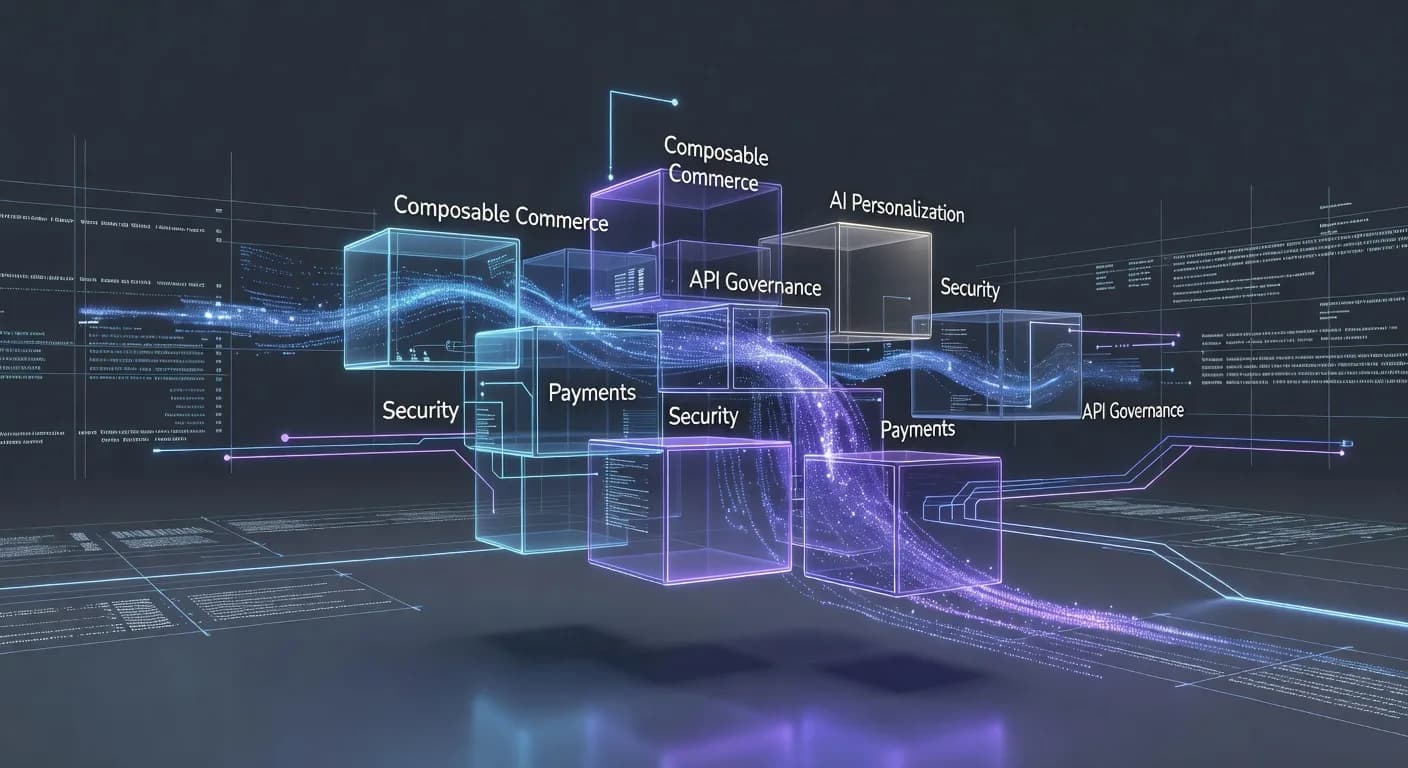
Ecommerce technology is evolving faster than ever, reshaping how businesses engage customers and operate online. As we step into 2026, marketing professionals and brand managers face a landscape defined by modular architectures, AI-driven personalization, real-time payments, and heightened security demands. Understanding these shifts is essential for staying competitive and delivering seamless customer experiences.
This article unpacks the major technological trends transforming ecommerce, focusing on practical priorities businesses must address to thrive in 2026.
Composable Commerce: The Foundation of Flexibility
Traditional ecommerce platforms often bundle all capabilities—search, cart, checkout, content management—into a single monolithic system. While this can simplify initial setup, it limits agility and customization.
Composable commerce offers a modern alternative. It assembles independent software components, such as search engines or payment modules, connected through APIs. This modularity allows businesses to tailor their ecommerce stack precisely to their needs and innovate faster.
Why Composable Commerce Matters
- Agility: Independent services can be updated or replaced without overhauling the entire system.
- Customization: Brands can mix and match best-of-breed tools for specific functions.
- Scalability: Modular components scale independently, supporting growth and peak demand.
MACH and JAMstack Technologies
Composable commerce typically leverages the MACH principles—Microservices, API-first, Cloud-native, and Headless architecture—and JAMstack (JavaScript, APIs, Markup). These enable:
- Decoupled frontends that improve performance and user experience.
- Cloud scalability and resilience.
- API-driven integration with external services.
Practical Considerations
Migrating to composable commerce is more than a tech swap; it requires strategic vision and organizational change. Many companies adopt a phased approach, starting with less critical components like search or content management, then gradually replacing core functions such as checkout.
This incremental "strangler fig" method reduces risk and allows teams to adapt.
AI and Omnichannel Customer Experience
Artificial intelligence is no longer just an assistant in ecommerce—it’s becoming an autonomous decision-maker shaping personalized experiences in real time.
Generative AI and Personalization
Generative AI helps create dynamic content, product descriptions, and search results tailored to individual preferences. Combined with first-party and zero-party data—information customers willingly share—this drives:
- Highly relevant product recommendations.
- Personalized marketing messages.
- Adaptive user interfaces that respond to behavior.
Omnichannel Integration
Customers expect seamless journeys across devices and channels. AI orchestrates these experiences by:
- Unifying data from web, mobile, social, and physical stores.
- Providing instant, context-aware responses.
- Enabling frictionless checkout regardless of touchpoint.
Privacy and Compliance
With regulations like GDPR, CPRA, and the EU’s Digital Markets Act, businesses must balance personalization with transparent data practices. AI systems need governance frameworks to ensure trust and compliance.
Payments and Security: Meeting 2026 Standards
Ecommerce payments are rapidly evolving, with real-time transactions and stronger security at the forefront.
Real-Time Payments
Systems like FedNow in the US and SEPA Instant in Europe enable instant fund transfers. This reduces settlement times and improves cash flow for merchants.
Open Banking and PSD3
Open Banking initiatives, regulated under frameworks like PSD3 in Europe, are expanding access to payment and financial data. This fosters innovation but also demands clear regulatory compliance.
PCI DSS 4.0 Compliance
The Payment Card Industry Data Security Standard (PCI DSS) version 4.0 emphasizes continuous validation of security controls rather than annual checklists. Key points include:
- Clear ownership of security responsibilities.
- Protection against hidden third-party script changes affecting checkout.
- Enhanced oversight of service providers.
Fraud and Chargeback Trends
As ecommerce grows, so do sophisticated fraud attempts. Businesses must deploy AI-powered fraud detection and maintain robust chargeback management processes to minimize losses.
API Governance: Controlling Complexity
Composable commerce relies heavily on APIs to connect diverse services. Without disciplined governance, API sprawl can lead to inconsistency, security gaps, and operational chaos.
What is API Governance?
API governance defines standards and policies for API design, security, versioning, and lifecycle management. It ensures that APIs:
- Meet security baselines.
- Follow consistent design conventions.
- Are properly versioned and deprecated.
- Have clear ownership and documentation.
Automation and Policy-as-Code
In 2026, API governance has evolved into an automated discipline embedded in continuous integration and delivery (CI/CD) pipelines. This means:
- Policies are enforced automatically during development and deployment.
- Continuous compliance checks reduce risks and speed delivery.
- Audit trails provide accountability.
Centralized API Catalog
Maintaining a comprehensive API catalog offers a single source of truth, enabling portfolio-level oversight and reporting.
Strategic Migration: From Monolith to Composable
Many businesses still operate on monolithic ecommerce platforms. Transitioning to composable or headless architectures requires careful planning.
When to Choose Headless vs. Composable
- Headless: Decouples the frontend from the backend, improving frontend flexibility but keeping backend commerce logic intact. Suitable when frontend performance or design agility is the bottleneck.
- Composable: Breaks down backend capabilities into independent services. Ideal for companies managing multiple brands, regions, or requiring independent release cycles for components like inventory or checkout.
Migration Approaches
- Strangler Fig Pattern: Gradually replace parts of the monolith with composable services.
- Domain-Driven Carve-Out: Extract specific business domains into separate services.
- Coexistence with Edge Proxy: Route requests intelligently between old and new systems during transition.
Migration timelines typically range from 12 to 36 months, depending on complexity and scale.
Quick Checklist
- Assess if composable commerce aligns with your business complexity and growth plans.
- Develop a phased migration roadmap starting with low-risk components.
- Invest in AI capabilities for personalization and omnichannel orchestration.
- Ensure continuous PCI DSS 4.0 compliance and implement real-time payment options.
- Establish robust API governance with automated policy enforcement.
- Build or adopt a centralized API catalog for visibility and control.
- Monitor evolving payment regulations like PSD3 and Open Banking compliance.
- Train teams and secure executive sponsorship for technological and organizational change.
FAQ
Q1: What is the difference between headless and composable commerce?
Headless commerce separates the frontend user interface from the backend platform but keeps backend functions bundled. Composable commerce breaks backend functions into independent services connected via APIs, offering greater modularity and customization.
Q2: How does AI improve ecommerce customer experience in 2026?
AI enables real-time personalization, dynamic content generation, and seamless omnichannel journeys by analyzing customer data and automating decisions to deliver relevant, timely interactions.
Q3: Why is PCI DSS 4.0 important for ecommerce businesses?
PCI DSS 4.0 requires continuous validation of security controls, reducing risks of data breaches and fraud. Compliance ensures safer online transactions and protects customer payment data.
Q4: What challenges do businesses face when migrating to composable commerce?
Challenges include technological complexity, organizational change management, coordinating multiple service providers, and ensuring consistent API governance.
Q5: How can businesses manage API sprawl effectively?
By implementing API governance frameworks that automate policy enforcement, maintain a centralized API catalog, and assign clear API ownership.
Final Thoughts
In practice, ecommerce technology in 2026 demands a balance between innovation and control. Composable commerce offers unmatched flexibility, but it requires thoughtful governance and a strategic migration approach to avoid fragmentation and complexity.
AI is no longer optional; it is foundational for delivering personalized, omnichannel experiences that customers expect. However, leveraging AI responsibly means embedding privacy and compliance at the core.
Payments and security are evolving in tandem, with real-time transfers and continuous compliance raising the stakes for operational readiness.
The bigger picture reveals that technology choices must align with organizational culture and business goals. Executive buy-in and cross-team collaboration are as critical as the tools themselves.
Looking ahead, businesses that master modular architectures, automated governance, and AI-driven customer engagement will set the pace. Those who treat ecommerce as a continuous transformation journey—not a one-time upgrade—will unlock sustained growth and resilience in a dynamic market.
Sources
- Composable Commerce in 2026 (Redefine You Tech Stack)
- Composable commerce: Why is it critical for growth in 2025? | Zoovu
- E-commerce 2026: headless, composable commerce & AI | Blog ARDURA Consulting
- What Your Business Needs to Know About PCI Compliance in 2026 - Burke CPAs & Advisors
- Payment Trends 2026 | finAPI
- Payment services and payment systems in 2026: trends, risks, and ...
- 9 eCommerce Customer Experience Trends You Can't Ignore in 2026
- AI in E-Commerce: 7 Ways It’s Redefining Shopping in 2026
- AI in eCommerce in 2026: Trends, Use Cases & Full Expert Guide
- What Is API Governance? Framework & Best Practices 2026
- Future of API Management: Enterprise Strategy 2026
- Bring Order to Chaos With Five API Governance Best Practices
Ready to Get Started?
Explore production-ready 3D models for your next project. Browse the 3D model catalog to download assets you can use right away.
Turn this workflow into real deliverables
Browse production-ready 3D models for your next project, then step into 3d modeling if you need a custom build.