Brazil’s Creator Boom Demands Real Localization
Introduction
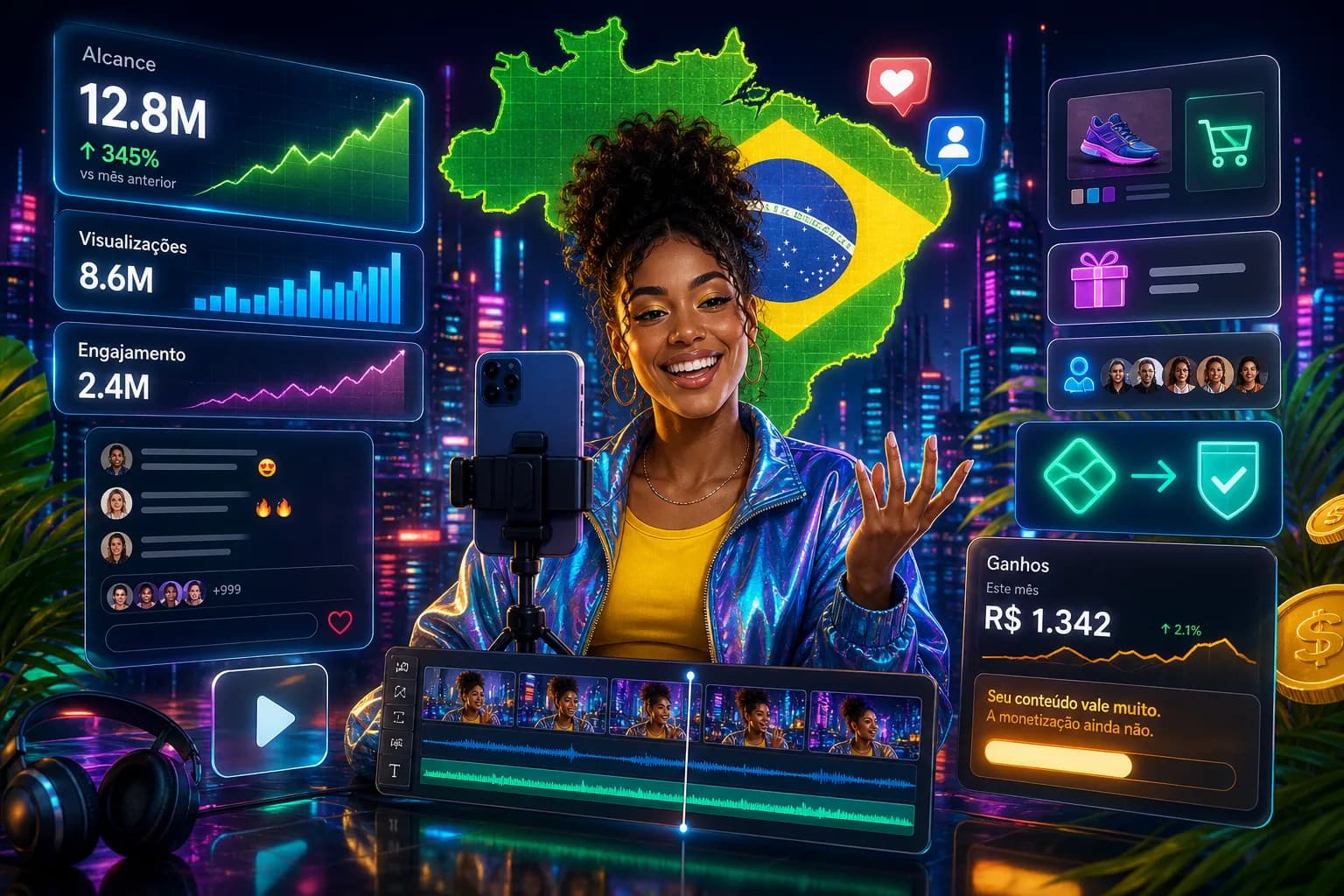
Brazil is not simply another large market waiting for translated interfaces. It is a vast, highly social creative ecosystem in which video, conversation, commerce and personal identity routinely overlap.
For global creator platforms, that scale is enticing. TikTok’s advertising tools have been reported to reach 91.7 million Brazilian adults, while Instagram added 6.1 million people to its potential advertising reach over the latest measured annual period. YouTube, Kwai and other video-first services add further competition for attention.
Yet audience size does not guarantee a healthy creator economy. One cited assessment found that half of Brazilian creators earned less than US$100 per month. That gap between participation and sustainable income is the central localization challenge.
A platform may attract viewers with a familiar feed. It earns lasting relevance only when Brazilian creators can understand it, get paid through it, build businesses around it and trust its rules. For marketers and brand managers, the lesson is similar: local reach is not the same as local resonance.
Brazil’s Opportunity Is Large—but Hard to Measure
Research firms broadly agree that Brazil’s creator economy is expanding quickly. They do not, however, measure precisely the same thing.
IMARC places the market at approximately US$5.47 billion in its latest estimate and projects it could eventually reach US$33.58 billion, with a forecast compound annual growth rate of 22.34%. Grand View Research offers a substantially higher long-range projection of US$58 billion and a 26.2% growth rate.
The difference is not necessarily a contradiction. “Creator economy” can include different combinations of platform revenue, advertising, subscriptions, brand partnerships, creative services, merchandise, affiliate sales and commerce infrastructure. IMARC, for example, analyzes the market across platform type, creative service, revenue channel and end use, while also separating video streaming, blogging, podcasting and other platforms.
For decision-makers, the prudent interpretation is directional rather than literal. Multiple forecasts indicate strong growth, but headline totals should not be compared until their category definitions, base periods and forecast horizons align.
A sound market analysis should therefore ask:
- Does the estimate count brand spending or only platform revenue?
- Are merchandise, subscriptions and affiliate sales included?
- Does it measure creator earnings, consumer spending or company revenue?
- Are agencies and production services part of the total?
- Does “Brazil” refer to creators, audiences, transactions or company operations located there?
These distinctions matter when setting budgets. A platform cannot infer its obtainable subscription revenue from a forecast that also counts advertising agencies, merchandise sales and unrelated creative services.
The more useful signal is the behavior underneath the projections. Brazil combines a very large social audience with widespread use of visual and video-led platforms. Demand for relatable content and increasingly accessible production tools can bring more people into creation. The commercial challenge is turning that participation into dependable opportunity beyond a small professional elite.
Localization Begins With the Product, Not the Campaign
Many international launches treat localization as the final layer: translate the menus, recruit recognizable faces and buy media. Brazil rewards a deeper approach.
Use Brazilian Portuguese as a product language
Brazilian Portuguese is not interchangeable with European Portuguese. Vocabulary, rhythm, humor, calls to action and expectations of warmth can differ substantially. Literal translation may be understandable while still feeling distant or mechanical.
The distinction should extend across the complete creator journey:
- Onboarding and educational materials
- Monetization terms and eligibility notices
- Content-policy explanations
- Copyright and account-status messages
- Campaign briefs and brand-safety guidance
- Help-center articles and customer support
Tone also matters. A legal notice should remain precise, but ordinary product copy can be direct and conversational. Local editors should evaluate whether the language sounds natural in context, not merely whether every word is technically correct.
Design around mobile behavior and conversation
A mobile-first interface is more than a responsive desktop page. Application flows should work on smaller screens, remain clear under variable connectivity and avoid unnecessary steps between discovery, purchase and payment.
Support should also reflect how people communicate. Portuguese-language assistance through familiar channels such as WhatsApp can reduce the distance between a global company and local users. That does not mean moving every sensitive interaction into chat. It means allowing users to begin in a familiar environment and receive clear guidance when secure in-app action is required.
Relationship-oriented communication is especially important in creator programs. Automated dashboards are efficient, but creators and agencies also need named contacts, timely explanations and context when campaign requirements change. A creator asked to represent a platform becomes a public interpreter of that platform’s reliability.
Treat moderation as a localization discipline
Content moderation cannot rely on vocabulary lists alone. Slang, satire, reclaimed language, regional expression and coded harassment require contextual judgment. The same phrase can be affectionate in one conversation and abusive in another.
Platforms should combine automated detection with reviewers who understand Brazilian Portuguese and local context. Appeals deserve equal attention. Even a well-calibrated system will make mistakes, so the quality of explanation and correction becomes part of the product experience.
For brands, the equivalent discipline is contextual brand safety. A keyword match cannot tell whether a creator is criticizing a harmful trend, participating in it or joking about it. Human review remains important for consequential partnerships.
Payments and Monetization Are Core Localization
The fastest way to expose superficial localization is to translate a checkout page while leaving foreign payment assumptions untouched.
Pix, Brazil’s real-time payment system, should be treated as core infrastructure rather than an optional badge. Domestic cards also matter. Global subscription and creator platforms may need local payment expertise to manage integrations, recurring billing and payment-flow optimization rather than assuming that an international card form is sufficient.
The commercial effect can be tangible. PagBrasil reports that cosmetics brand Boca Rosa achieved a 91% approval rate for Pix transactions after optimizing its Shopify checkout. That is one company’s result, not a universal conversion benchmark, but it demonstrates why payment design deserves the same attention as acquisition.
Platforms should examine both sides of the transaction:
- Audience payments: Can fans buy, subscribe or tip using familiar methods?
- Creator payouts: Can creators receive money with understandable timing, fees and thresholds?
- Campaign settlement: Can brands, agencies and creators reconcile invoices and payments without excessive friction?
- Refunds and disputes: Are policies explained in Portuguese and designed around the supported payment methods?
- Earnings visibility: Can creators distinguish pending, approved and paid revenue?
Payment access alone does not create viable creator careers. Monetization must also reach beyond managed stars.
Kwai’s investment in Brazil illustrates both sides of the opportunity. The platform treated the country as a gateway to wider Latin American expansion before moving into markets including Mexico, Chile and Argentina. At the same time, reporting indicated that creators outside its managed talent structure could struggle to monetize without broader direct-payment programs.
The lesson is not unique to Kwai. High-profile partnerships can create awareness, but a platform’s long-term supply of content depends on the large middle: promising creators who have traction but not celebrity status or agency representation.
That is why access to tools matters. Instagram supports mechanisms such as Creator Marketplace, paid-partnership labels and subscriptions, while TikTok and other platforms offer their own combinations of rewards, commerce, gifting and brand collaboration. Availability and eligibility can vary, so platforms and brands should audit what Brazilian creators can actually use rather than relying on global feature announcements.
Global benchmarks require similar caution. One broad comparison suggests that creators with 100,000 followers can command higher average brand-deal prices on Instagram than on TikTok. Another estimates substantially higher average engagement on TikTok. Neither provides a Brazil-specific rule.
Follower count, engagement rate and platform averages are useful screening signals, not price cards. A Brazilian creator’s commercial value depends on audience location, trust, category relevance, format, usage rights, production work and the brand’s objective.
What Global Platforms and Brands Should Do Differently
Successful localization changes operating decisions, not just messaging.
Build a local creator ladder
Instead of dividing the market into celebrities and everyone else, create progressive levels of support. A new creator may need education and discovery. A growing creator may need campaign access, analytics and predictable payouts. An established creator may need account management, rights tools and sophisticated commerce options.
This structure makes investment more inclusive while giving the platform measurable progression points. It also helps brands find specialists whose communities are smaller but tightly aligned with a product category or region.
Run briefs through local reality
A campaign concept developed elsewhere may depend on humor, social rituals or buying behavior that does not transfer. Brazilian strategists should have authority to reshape the idea rather than simply adapt the wording.
Briefs should specify the business objective while leaving room for a creator’s natural voice. Over-scripted work often removes the familiarity that made the creator valuable. The brand should protect factual claims and mandatory disclosures without dictating every gesture or phrase.
Measure economic quality, not just attention
Views are easy to celebrate. A mature program also tracks whether the underlying exchange works for each participant.
Useful measures include:
- Creator activation and repeat participation
- Monetization eligibility and successful payout rates
- Payment approval and checkout completion
- Revenue distribution across creator sizes
- Support resolution and appeal outcomes
- Brand lift, qualified traffic and attributable sales
- Creator retention after incentives or launch campaigns end
These measures reveal whether a platform is building a market or temporarily purchasing activity. A surge in posts can coexist with weak earnings, confusing rules and creator churn.
Test by segment, not by “Brazil” alone
Brazil should not be treated as a single cultural persona. Campaign teams can segment by audience interest, creator maturity, content format, location and commercial goal without reducing people to stereotypes.
A beauty commerce program, a gaming sponsorship and an educational subscription product will require different creators, conversion paths and success metrics. Localization becomes more effective when the team begins with a specific community and use case rather than a generic national profile.
Quick Checklist
- Use native Brazilian Portuguese across product copy, policies, support and campaign briefs.
- Test the full mobile journey, including account creation, discovery, checkout and payout visibility.
- Support Pix and relevant domestic card flows instead of translating an international checkout alone.
- Confirm which monetization features are genuinely available and accessible to Brazilian creators.
- Give micro- and nano-creators pathways to brand work, education and direct earnings.
- Use local expertise for moderation, appeals, humor, slang and campaign review.
- Measure creator retention, payout success and revenue distribution alongside reach and engagement.
- Compare market forecasts only after aligning their definitions, periods and revenue categories.
Frequently Asked Questions
Why is Brazil important to global creator platforms?
Brazil combines enormous potential reach on video-first social platforms with a vibrant culture of online creation and interaction. Market forecasts also point toward rapid expansion, although their totals differ because they use different definitions. The opportunity is credible, but its exact size should not be reduced to one headline number.
Is translating a platform into Portuguese enough?
No. Effective localization includes Brazilian Portuguese, mobile-first product design, locally relevant support, contextual moderation, accessible monetization and familiar payment methods. Translation is necessary, but it is only one layer of the operating model.
Why does Pix matter to creator platforms?
Pix can make local payments more familiar and convenient for Brazilian users. It can support audience purchases and subscriptions, while a broader local payment strategy can improve checkout, recurring billing and transaction management. Platforms must still design creator payouts and financial communication separately.
Should brands prioritize large influencers?
Not automatically. Large creators can deliver broad awareness, while micro- and nano-influencers may offer close community relevance. Selection should depend on audience fit, content quality, location, brand safety, usage rights and the campaign objective—not follower count alone.
Which platform performs best in Brazil?
There is no universal winner. Instagram, TikTok, YouTube and Kwai support different formats, audiences and commercial paths. Global engagement or pricing estimates should not be presented as Brazilian benchmarks. Brands should test comparable creative across relevant local audience segments and evaluate business outcomes.
Final Thoughts
Brazil’s creator boom should be understood as an infrastructure test. A platform proves its commitment not through a launch event, but through the ordinary details of language, support, moderation, checkout and payout.
The first editorial judgment is that localization and monetization are inseparable. If creators can publish but cannot reliably earn—or if audiences encounter avoidable payment friction—the platform has localized attention without localizing value.
Second, the market’s largest strategic opportunity may sit below the celebrity tier. The evidence of low creator earnings suggests that participation remains much broader than prosperity. Platforms and brands that make opportunities legible and accessible to smaller creators can build a healthier pipeline rather than repeatedly competing for the same famous names.
Finally, market forecasts should inspire investigation, not false precision. The bigger picture is convincingly one of growth, but the durable winners will be those that measure the quality of their local ecosystem: who gets discovered, who gets paid, who stays and who trusts the system enough to build on it.
Sources
- Brazil Creator Economy Market Size, Share, Trends 2026-2034
- Creator Economy Market Size, Trends & Forecast, 2026-2033
- Creator Economy Market Research Report 2034
- Pix for Global Businesses: A Guide to Payments in Brazil | PagBrasil
- Brazil: The $346 Billion Opportunity That PIX Built
- Unlock Brazil's AI Market with Localized Payments | PagBrasil
- TikTok’s biggest Chinese competitor bets big on Brazil - Rest of World
- Collaborating with Micro and Nano Influencers
- TikTok or Kwai for digital strategy: which to use? Find out!
- Brazil Creator Economy Market Size & Outlook, 2026-2033
- Creator Economy Market Size 2026-2030
- Instagram vs TikTok for Creators: 5 Data Tables (2026)
Ready to Get Started?
Explore production-ready 3D models for your next project. Browse the 3D model catalog to download assets you can use right away.
Turn this workflow into real deliverables
Browse production-ready 3D models for your next project, then step into 3d modeling if you need a custom build.