Ecommerce Tech Playbook 2026: Startups vs Enterprises
Introduction
Ecommerce in 2026 is less about adding features and more about composing them. API-first platforms, AI-native personalization, and cookieless analytics are re-drawing the growth map. The winners connect these pieces into one adaptable system.
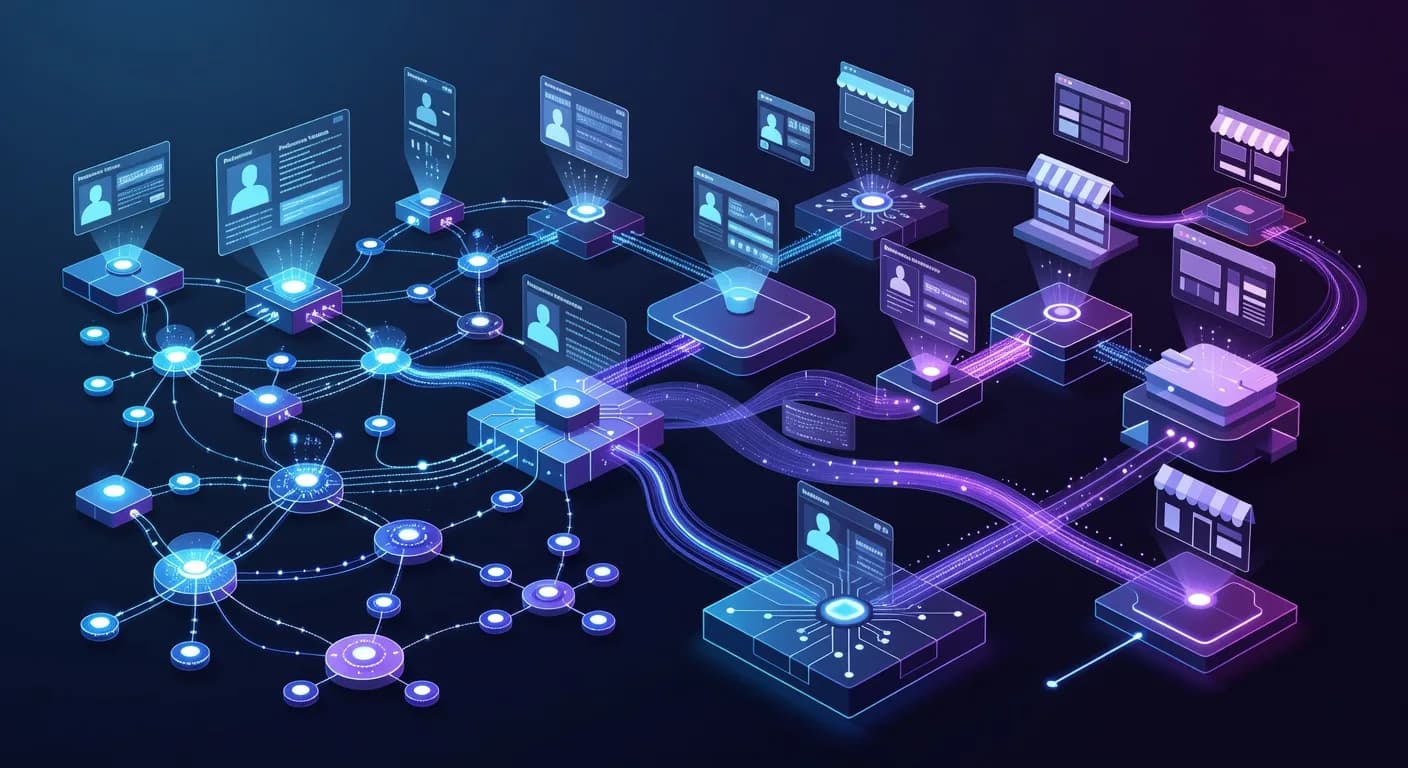
The 2026 stack: composable, API-first, agentic
Headless and composable commerce turn the storefront into a flexible layer, with services—pricing, checkout, search—linked by APIs. This sets the stage for “agentic commerce,” where systems learn and act proactively rather than just reacting.
Practically, pick vendors that are truly API-first. Platforms that expose core functions via standard APIs integrate predictably and scale cleanly; long chains of plugins and brittle connectors create upgrade risk and hidden maintenance costs.
- Versioned, well-documented APIs
- Event streaming for orders and catalog changes
- Sandboxes, rate limits, and clear security models
Design for failure, not perfection. Use circuit breakers and fallbacks for recommendations, search, and payments so a single vendor outage doesn’t tank conversion during peak traffic.
AI-native personalization that actually moves P&L
Personalization is now expected, and leaders report roughly 40% more revenue than laggards when they execute deeply. In headless setups, AI becomes the intelligence layer—driving dynamic content, predictive bundles, and smart merchandising.
Economics are compelling: enterprise AI programs frequently show 191–333% ROI over three years. Shoppers also say AI assistance improves experiences and confidence, creating a pull that marketers can harness across channels.
But there’s an adoption gap: only a small fraction have scaled AI beyond experiments, while many are stuck piloting. Close that gap by tying models directly to clear KPIs—AOV, CLV, CAC—and by closing the loop with rigorous attribution.
Prerequisites: a CDP with unified identities, event streaming from commerce and content, and lightweight governance over features and experiments.
Priority use cases to start or scale:
- Search and browse: semantic search that understands intent.
- Recommendations: PDP, cart, and email modules tuned to margin, not just clicks.
- Merchandising: predictive bundles and dynamic content by audience and locale.
- Fraud and risk: pre-authorization signals to reduce false declines.
- Content generation: AI-assisted copy and imagery variants governed by brand rules.
Cookieless growth and credible attribution
With third‑party cookies fading, the 2026 stack leans on four pillars: server‑side tracking, first‑party data, AI‑assisted attribution modeling, and disciplined conversion syncing back to ad platforms.
Server-side tagging, often via GTM’s server container, has become the norm. By routing a single browser event to a tagging server you control, brands commonly recover roughly 15–30% of conversions missed by client-side setups.
Round it out with clean-room partnerships for media and retail media. Identity is matched in a privacy-safe environment so you can measure incrementality without leaking PII.
Build vs. buy in 2026: startups and enterprises
Startups should bias to buy and compose, not custom-build. Composable services shorten time to value while keeping options open as needs evolve.
Enterprises need API-first at the core. Platforms that treat APIs as first-class make integrations predictable and secure; those that rely on connector chains risk brittle dependencies and surprise costs.
ERP-embedded commerce reduces integration risk but can slow delivery and limit agility. If you’re deeply invested in one ERP, it can fit; otherwise, a composable approach keeps you from inheriting ERP constraints.
Avoid classic traps: underestimating integration and governance costs, over-relying on custom code, and ignoring multi-market complexity. Treat ecommerce as a program with a roadmap and technical blueprint, not a one-off launch.
Product content and 3D workflows as growth levers
AI-powered personalization thrives on rich product content. Invest in structured attributes, variant data, and consistent media so models can reason about relevance and margin—not just clicks.
3D and configurable media raise conversion when paired with fast pages and clear UX. Build a light, reusable pipeline for hero renders, turntables, and AR-ready assets, then feed them to PDPs and ads.
To speed production, start with ready-to-edit assets from our free 3D model catalog. Use downloadable bases to test lighting, materials, and camera recipes before scaling to full shoots.
For teams building configurators, keep the pipeline modular: PIM for attributes, a real-time viewer, and an API to swap materials. You can prototype scenes quickly with downloadable 3D models to validate load times and fidelity.
When launching in new markets, use the same asset graph to localize imagery and copy. A shared library reduces rework and helps AI models maintain consistent recommendations across languages and assortments.
Quick Checklist
- Select an API-first commerce core; verify versioned APIs and sandboxes.
- Stand up server-side tagging; baseline recovery of 15–30% lost conversions.
- Operationalize a CDP; define events, identities, and consent flows.
- Deploy 2–3 AI use cases tied to KPIs (AOV, CLV, CAC).
- Ship a lightweight 3D content pipeline; validate load time and SEO.
- Create a governance board for roadmap, TCO, and vendor risk.
FAQ
What is “agentic commerce,” in plain terms?
It’s a commerce stack that predicts and acts, not just responds. By connecting a headless core, content, and data via APIs, AI can anticipate needs—like surfacing a replenishment bundle before the shopper searches.
How do we measure ROI from AI in 2026?
Use business KPIs, not model metrics. Enterprises often report 191–333% ROI over three years when AI is tied to merchandising and automation, but only scaled programs break out of endless pilots.
Is server-side tagging worth the lift?
Yes. It centralizes governance and typically recovers 15–30% of conversion signals blocked in browsers, while feeding cleaner events into analytics, ad platforms, and your CDP.
Where should 3D content sit in our roadmap?
Treat 3D as a reusable system, not a one-off campaign. Start with a pilot using assets from our 3D model library, measure PDP speed and engagement, then scale to configurators or AR.
Conclusion
Ecommerce technology in 2026 rewards teams that connect the dots. Compose the core, operationalize data, and let AI personalize responsibly while respecting privacy.
Focus on a few moves that compound: API-first selection, server-side tagging, AI tied to KPIs, and a scalable 3D pipeline. This mix safeguards independence today and sets you up to adapt tomorrow. Start small, ship weekly, instrument everything, and let real customer
Sources
- 7 Headless Commerce Trends That Matter Most in 2026
- 2026 eCommerce Trends | Clarkston Consulting
- 27 Generative AI Commerce Adoption Statistics for Ecommerce 2026
- Enterprise Ecommerce Platforms: Full Comparison Guide [2026]
- The State of B2B eCommerce Platforms (2026 Comparison Guide)
- 2026 E-Commerce Platforms: Choosing Enterprise Systems
- Data Privacy Marketing 2026: Cookieless Strategy
- Cookieless Tracking Future Trends: Complete Guide 2026
- Cookieless Attribution Guide: Methods & Accuracy (2026)
- Headless CMS Trends in 2026 - Waredock
- Data-Driven, AI-Powered Commerce: Strategies for 2026
- 35 AI Agent Adoption Trends for Ecommerce in 2026
Ready to Get Started?
Explore production-ready 3D models for your next project. Browse the 3D model catalog to download assets you can use right away.
Turn this workflow into real deliverables
Browse production-ready 3D models for your next project, then step into 3d modeling if you need a custom build.