Generative AI Transforming Content Creation Markets by 2026
Introduction
In 2026, generative artificial intelligence (AI) is no longer a futuristic concept but a central force reshaping how content is created, distributed, and monetized. From text and images to video and audio, AI-driven tools are revolutionizing marketing workflows, enabling brands to produce richer content faster and at lower cost. For marketing professionals and brand managers, understanding this transformation is critical—not only to harness new efficiencies but also to navigate emerging legal and ethical challenges.
This article explores generative AI’s growing impact on content creation markets through 2026, drawing on recent market forecasts, adoption statistics, and regulatory developments. We will unpack how AI tools optimize creative processes, the scale of market growth, and what this means for marketing strategies going forward.
The Expanding Market for AI-Generated Content
Market Growth and Segmentation
The global AI content creation tool market is projected to expand from approximately USD 1.08 billion in recent years to around USD 3.86 billion by the end of 2026, growing at a compound annual growth rate (CAGR) of 13.6%. This market encompasses platforms that generate text, graphics, video, and audio, deployed both in the cloud and on-premises.
More broadly, the generative AI market—including applications beyond content creation—is expected to surge dramatically, with forecasts suggesting growth from USD 22.33 billion in 2025 to nearly USD 678 billion by 2035. While this reflects an expansive technological wave, content creation remains a core use case driving adoption.
Content Types and Industry Applications
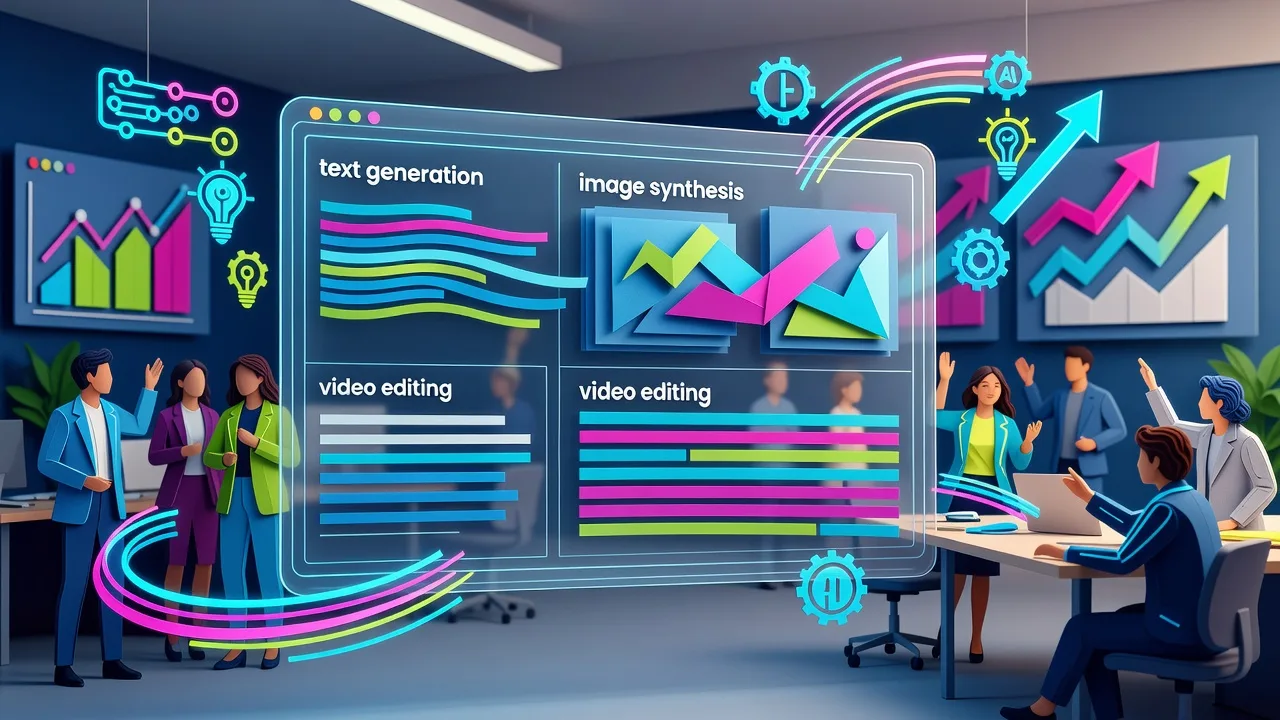
Marketing professionals are leveraging generative AI across diverse content types:
- Text Generation: AI models produce blog posts, social media captions, email campaigns, and scripts, cutting production times significantly.
- Image and Graphic Creation: AI art generators and design tools enable rapid visual content generation, aiding branding and advertising.
- Video Production: AI-powered editing and generation tools streamline video content creation for digital platforms.
- Audio Content: AI assists in podcast scripting, voiceovers, and music composition.
These capabilities serve sectors including marketing, publishing, e-commerce, entertainment, and education, with marketing workflows among the leading adopters.
How Generative AI is Changing Marketing Content Workflows
Accelerating Production and Reducing Costs
A key driver for AI adoption is the substantial reduction in content creation time and associated costs. Surveys indicate that 93% of marketers report accelerated content production thanks to AI, with some citing a drop in blog post creation time from 8–10 hours to under 2 hours.
Large language models (LLMs) and AI art tools enable marketers to generate drafts, creative concepts, and visual assets rapidly, freeing human teams to focus on strategy and refinement. This shift not only boosts productivity but also reduces reliance on external agencies or freelancers for routine content generation.
Enhancing Creativity and Personalization
Interestingly, many digital creators report that AI tools enhance their creativity rather than replace it. About 52% of creators say generative AI helps them explore new ideas and produce more diverse content.
Moreover, AI facilitates real-time personalization at scale. Marketers can tailor messaging and visuals dynamically for different audience segments, improving engagement and conversion rates. Integration of AI with content management systems (CMS) and multilingual platforms further expands global reach.
SEO and Optimization Benefits
AI-powered content tools also contribute to search engine optimization (SEO) improvements. Approximately 65% of marketers observe better SEO performance with AI-generated content, as these tools assist in keyword optimization, meta descriptions, and content structuring.
This optimization capability helps brands maintain visibility in increasingly competitive digital landscapes.
Legal and Ethical Considerations in AI Content Creation
Copyright and Licensing Challenges
As generative AI relies heavily on training data drawn from existing copyrighted works, legal tensions have intensified. The European Parliament’s 2026 Resolution on Copyright and Generative AI signals a potential shift toward stricter copyright compliance and territorial reach for AI systems operating in the EU.
This non-binding resolution reflects growing concern about the use of copyrighted materials in AI training and the rights of original creators. Lawsuits involving major AI developers highlight the unsettled legal landscape, with implications for content markets worldwide.
Data Transparency and Ethical Use
Beyond copyright, ethical questions arise regarding transparency about AI-generated content and potential biases embedded in training data. Marketers must balance innovation with responsible practices, ensuring AI tools do not propagate misinformation or infringe on intellectual property.
Proactive compliance and clear disclosure policies will be essential as regulations evolve.
Regional and Sectoral Adoption Trends
Geographic Variations
North America, Europe, and Asia-Pacific lead in AI content tool adoption, driven by robust digital infrastructures and investment. Markets such as the US, UK, Germany, Japan, China, and India are focal points for deployment, with regional regulations influencing adoption strategies.
Sector-Specific Uptake
Marketing agencies and in-house brand teams are among the most active users, with approximately 75% of marketers having integrated AI tools into workflows by 2026. Content creation ranks as the leading use case for 62% of these adopters.
Publishers and media companies utilize AI for editorial assistance and multimedia production, while e-commerce firms apply AI to generate product descriptions and personalized recommendations.
Checklist: Preparing Your Marketing Team for AI-Driven Content Creation
- Evaluate current content workflows to identify repetitive or time-consuming tasks suitable for AI automation.
- Pilot AI content creation tools focused on your primary content types (text, images, video).
- Train marketing staff on effective AI prompt techniques and ethical use guidelines.
- Establish clear policies for copyright compliance and attribution when using AI-generated content.
- Integrate AI tools with existing CMS and analytics platforms for seamless workflow and performance tracking.
- Monitor AI-generated content quality regularly to maintain brand voice and messaging consistency.
- Stay informed on evolving AI regulations and industry best practices.
- Plan for ongoing evaluation and scaling of AI adoption based on ROI and productivity gains.
FAQ
What is generative AI, and how does it differ from traditional AI?
Generative AI refers to algorithms that create new content—such as text, images, or videos—based on learned patterns from training data. Unlike traditional AI, which might classify or analyze data, generative AI produces original outputs that mimic human creativity.
How much time can marketers save using generative AI?
Studies show that generative AI can reduce content creation time by up to 65%, with blog posts that once took 8–10 hours now produced in under 2 hours, enabling faster campaign turnarounds.
Are AI-generated contents SEO-friendly?
Yes, AI tools can optimize content with relevant keywords, meta tags, and structure, improving search engine rankings. Approximately 65% of marketers report SEO improvements using AI-generated content.
What legal risks should marketers consider when using generative AI?
Key risks involve copyright infringement due to AI training on copyrighted materials and unclear licensing for AI outputs. Marketers should ensure compliance with regional laws and monitor ongoing legal developments.
Will AI replace human content creators?
While AI automates routine tasks and accelerates production, it currently serves as a creative assistant rather than a replacement. Many creators find AI enhances their creativity and allows them to focus on strategic, high-value work.
Final Thoughts
Generative AI is rapidly transforming content creation markets, offering marketing professionals unprecedented tools to boost productivity, creativity, and personalization. The technology’s ability to generate diverse content types—text, images, video, and audio—at scale is reshaping traditional workflows, enabling brands to engage audiences more effectively and efficiently.
However, this transformation comes with important tradeoffs. Legal and ethical challenges surrounding copyright, data transparency, and responsible use demand careful navigation. Marketing leaders must balance the pursuit of innovation with compliance and brand integrity.
Looking ahead, the bigger picture suggests that generative AI will not merely automate content but will redefine creative collaboration between humans and machines. Success will depend on how well marketers integrate AI tools into their strategic processes, fostering a partnership that amplifies human insight rather than replacing it.
As AI adoption becomes mainstream, staying informed about evolving technologies and regulations will be essential. Those who embrace generative AI thoughtfully can unlock significant competitive advantages, while those who overlook the complexities risk operational and reputational setbacks.
In practice, the most effective content strategies in 2026 and beyond will blend human creativity with AI-driven efficiency, supported by clear ethical frameworks and legal awareness. This balanced approach will empower marketers and brand managers to thrive in an increasingly AI-enabled content landscape.
Sources
- AI Content Creation Tool Market | Global Market Analysis Report
- AI Powered Content Creation Market Size & Industry Growth
- Generative AI Market Size, Share, Trend, Scope Report 2026 to 2035
- AI Marketing ROI Statistics 2026: 50+ Sourced Data Points
- AI Adoption Statistics Q1 2026: All Figures - Vention
- 50+ Content Marketing Statistics to Watch [2026] - Typeface
- AI Training and Copyright in Europe: A Potential Shift Beyond Territoriality: Potomac Law
- Artificial Intelligence Impacts on Copyright Law - RAND
- [PDF] Generative AI and Copyright - European Parliament
- Generative AI in Content Creation Market CAGR of 31%
- AI Content Generation Market Size & Opportunities, 2026-2033
- 75+ Generative AI Statistics 2026: Market Size, Adoption Rates, ROI Data & Future Projections
Ready to Get Started?
Explore production-ready 3D models for your next project. Browse the 3D model catalog to download assets you can use right away.
Turn this workflow into real deliverables
Browse production-ready 3D models for your next project, then step into 3d modeling if you need a custom build.