Harnessing Marketing Automation Trends to Elevate Customer Journeys
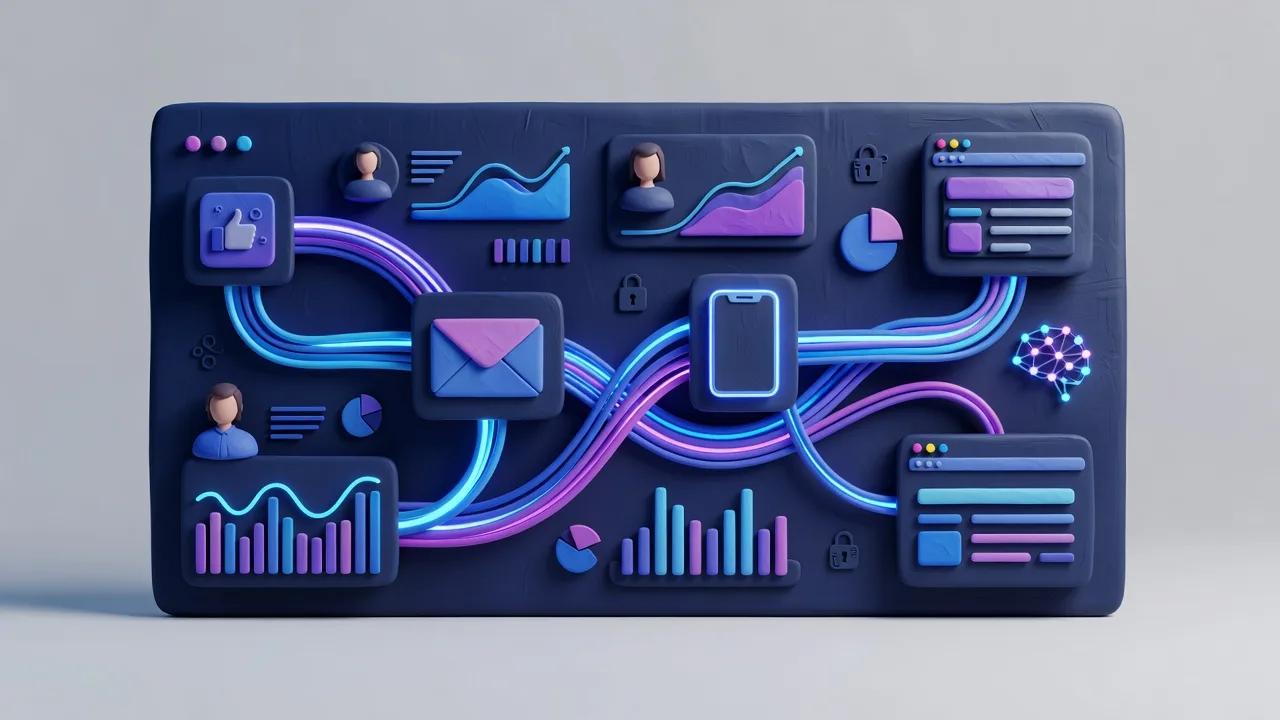
Introduction
In 2026, the landscape of marketing automation is rapidly evolving, reshaping how brands engage customers throughout their journeys. Gone are the days of linear, one-size-fits-all funnels; today’s customer journeys are dynamic, nonlinear, and demand real-time adaptation powered by advanced automation and AI. For marketing professionals and brand managers, understanding the latest trends in marketing automation is crucial to crafting personalized, seamless experiences that optimize engagement and conversion.
This article dives into the forefront of marketing automation trends shaping customer journey optimization in 2026. We will explore how leading platforms leverage AI, real-time data, and omnichannel orchestration, while navigating privacy regulations, to deliver measurable business impact.
The Shift to Dynamic Customer Journey Orchestration
Traditional marketing funnels no longer capture the complexity of modern customer behavior. Buyers interact with brands across multiple touchpoints, switching channels and devices unpredictably. To meet this challenge, Customer Journey Orchestration (CJO) platforms have emerged as essential tools.
These platforms unify customer data from diverse sources, apply AI-driven decisioning, and automate personalized interactions across channels in real time. Leading CJO platforms in 2026—such as Netcore, Braze, Klaviyo, and Connectif—focus on:
- Real-time data processing: Capturing and reacting to customer signals instantly.
- AI-powered decisioning: Predictive and generative AI models tailor content and timing.
- Omnichannel engagement: Coordinating messaging across email, SMS, social, push notifications, and more.
For example, Cogna Educação, an education services provider, integrated offline and online data to identify students at risk of disengagement. Using predictive triggers, they personalized communications via SMS, WhatsApp, and email, achieving a 7X ROI and 52% faster lead conversion within just three months. This case underscores the power of context-aware, timely orchestration to accelerate business outcomes.
Why Dynamic Orchestration Matters
- Nonlinear journeys: Customers don’t follow preset paths; automation must adapt dynamically.
- Cross-team collaboration: Orchestration triggers actions beyond marketing, involving sales, support, and product teams.
- Continuity over time: Long enterprise buying cycles require sustained, cohesive engagement.
In practice, this means marketers must move beyond simple drip campaigns to sophisticated journey maps that respond to live behavior and signals.
AI-Driven Personalization and Predictive Automation
AI is the engine powering the latest marketing automation breakthroughs. In 2026, platforms fall into two broad categories:
- Heavyweight suites: Salesforce Marketing Cloud and Adobe Experience Platform offer deep personalization, real-time Customer Data Platforms (CDPs), and journey optimization for complex enterprise ecosystems.
- AI-native tools: Braze, Iterable, and RevGeni.ai provide faster predictive and generative AI capabilities, emphasizing agility and marketer-friendly interfaces.
How AI Enhances Customer Journeys
- Real-time personalization: AI models analyze customer profiles and behaviors on the fly, tailoring offers, content, and timing.
- Predictive triggers: Anticipate customer needs or risks, such as churn or upsell opportunities.
- Generative content: Automated creation of personalized messages and recommendations.
For instance, Yves Rocher increased conversion rates by over 18% through AI-powered onsite banners and further boosted engagement with automated cross-channel cart abandonment journeys combining social ads, web push, and predictive segmentation.
Implementation Insights
Successful AI adoption begins with a thorough audit of existing data and processes, coupled with detailed journey mapping. This foundation ensures AI models have quality inputs and clear objectives, avoiding costly missteps.
Omnichannel Automation: Coordinating Across Touchpoints
Customers expect seamless experiences regardless of channel. Omnichannel marketing automation integrates multiple platforms and communication modes to maintain consistent messaging and context.
Key elements include:
- Unified customer profiles: Aggregating data from websites, apps, CRM, social media, and offline sources.
- Channel orchestration: Automated sequencing and timing of messages across email, SMS, push notifications, social, and more.
- AI-powered recommendations: Delivering relevant content tailored to channel preferences and behaviors.
Bloomreach customers reported a 27% increase in conversion rates and 35% higher email open rates by leveraging journey orchestration across channels. Insider One’s AI-powered recommendations also delivered a 20% uplift in conversions.
Choosing the Right Tools
Platform selection depends on scale, speed, and integration needs:
- Adobe Journey Optimizer excels in enterprise-scale throughput and low latency, handling millions of events per hour.
- Braze focuses on rapid deployment and real-time event processing, ideal for brands prioritizing agility.
- Iterable offers marketer-friendly journey design with intuitive segmentation and emerging agentic AI features.
Understanding these trade-offs helps marketers align tools with strategic goals and operational capabilities.
Navigating Privacy and Compliance in 2026
Marketing automation in 2026 operates amid evolving privacy regulations such as GDPR, CCPA/CPRA, and the EU AI Act. Compliance is no longer optional; it is integral to customer trust and sustainable marketing.
Key Privacy Considerations
- First-party data emphasis: With third-party cookies deprecated, marketers rely more on consented first-party and server-side data.
- Consent management: Transparent, granular consent mechanisms tailored to regional regulations.
- AI governance: Verifying lawful data provenance for AI model training and ensuring human oversight for automated decisions classified as high-risk.
- Data protection impact assessments (DPIAs): Especially for biometric data processing and AI applications.
Failing to comply risks fines and reputational damage, but proactive privacy-led marketing can become a competitive advantage.
Best Practices
- Implement comprehensive data audits and consent frameworks.
- Choose platforms with built-in compliance features and audit logs.
- Educate teams on regulatory changes and ethical AI use.
Measuring Impact: ROI and Performance Metrics
Quantifying the benefits of marketing automation and journey orchestration is essential for justifying investment and guiding continuous improvement.
Metrics to Track
- Customer Lifetime Value (CLV) uplift: Measuring increased revenue per customer due to personalized journeys.
- Conversion rate improvements: Comparing orchestrated segments against controls.
- Cost per acquisition (CPA) reductions: Efficiency gains from targeted automation.
- Engagement metrics: Email open rates, click-through rates, and website interactions.
For example, Bloomreach reported a three-year ROI of 251% among customers using journey orchestration, with significant gains in conversion and deliverability.
Framework for Evaluation
- Define clear goals aligned with business objectives.
- Use A/B testing and control groups to isolate automation effects.
- Leverage platform analytics and integrate with broader BI tools.
Quick Checklist: Optimizing Customer Journeys with Marketing Automation in 2026
- Conduct a comprehensive audit of customer data sources and quality.
- Map current customer journeys, identifying nonlinear paths and key touchpoints.
- Select a Customer Journey Orchestration platform prioritizing AI decisioning, scalability, and omnichannel integration.
- Implement real-time personalization using AI-driven predictive and generative models.
- Design omnichannel campaigns ensuring consistent messaging across email, SMS, social, and push notifications.
- Establish robust consent management and privacy compliance aligned with GDPR, CCPA, and AI governance requirements.
- Define clear KPIs such as CLV uplift, conversion rates, and CPA reductions.
- Regularly review performance data and iterate journey designs based on insights.
FAQ
What is Customer Journey Orchestration and why is it important?
Customer Journey Orchestration is the process of managing and automating personalized customer interactions across multiple channels in real time. It is important because modern customer behaviors are complex and nonlinear, requiring dynamic adaptation to maintain engagement and drive conversions.
How does AI improve marketing automation in 2026?
AI enhances marketing automation by enabling real-time personalization, predictive triggers for timely engagement, and generative content creation. This leads to more relevant customer experiences and improved business outcomes.
How can marketers ensure compliance with privacy regulations when using automation?
Marketers should implement transparent consent management, use first-party data responsibly, conduct data protection impact assessments, and ensure AI models are trained on lawful data with human oversight where required.
What are key metrics to measure the success of journey orchestration?
Important metrics include customer lifetime value uplift, conversion rate increases, cost per acquisition reductions, and engagement indicators like email open and click rates.
How do I choose between platforms like Adobe Journey Optimizer and Braze?
Consider your scale and speed needs: Adobe excels in enterprise-scale throughput and low latency, while Braze offers rapid deployment and real-time event handling. Also assess integration capabilities, AI features, and ease of use.
Final Thoughts
In practice, the most successful marketing automation strategies in 2026 are those that embrace the complexity of customer journeys rather than trying to simplify them. Dynamic Customer Journey Orchestration, powered by AI and omnichannel automation, enables brands to meet customers where they are—at the right moment, on the right channel, with the right message. This agility transforms marketing from a series of disconnected campaigns into a continuous, responsive dialogue.
The bigger picture reveals that technology alone is not enough. Marketers must ground AI implementations in rigorous data audits and ethical frameworks, ensuring compliance with evolving privacy laws. This dual focus on innovation and responsibility builds trust, the foundation of lasting customer relationships.
What this suggests for marketing professionals is a shift in mindset: from controlling the customer journey to facilitating it. By leveraging the latest automation trends thoughtfully and strategically, brands can unlock substantial ROI, deepen engagement, and future-proof their marketing in an increasingly complex digital ecosystem.
Sources
- 5 Best Customer Journey Orchestration Platforms for 2026
- Best Practice Marketing Automation with AI in 2026 – Rev-Geni
- 16 Marketing Automation Trends You Should Know in 2026 - Transfunnel
- Customer Journey Orchestration: 5 Essential Steps, Tools & Examples (2026 Guide)
- 14 Customer Journey Orchestration Trends Shaping 2026
- Omnichannel Marketing Automation Explained with Examples
- GDPR Compliance in 2026: The Complete Guide - Secure Privacy
- Marketing Data Privacy & Compliance | Best Practices in 2026
- Data Privacy Trends in 2026: What to Expect - Cookie Script
- Braze vs Adobe Journey Optimizer: Which one for Modern ...
- Braze vs Adobe: Use Cases, Limitations & Alternative
- Marketing Automation Platform Comparison Guide 2026
Ready to Get Started?
Explore production-ready 3D models for your next project. Browse the 3D model catalog to download assets you can use right away.
Turn this workflow into real deliverables
Browse production-ready 3D models for your next project, then step into 3d modeling if you need a custom build.